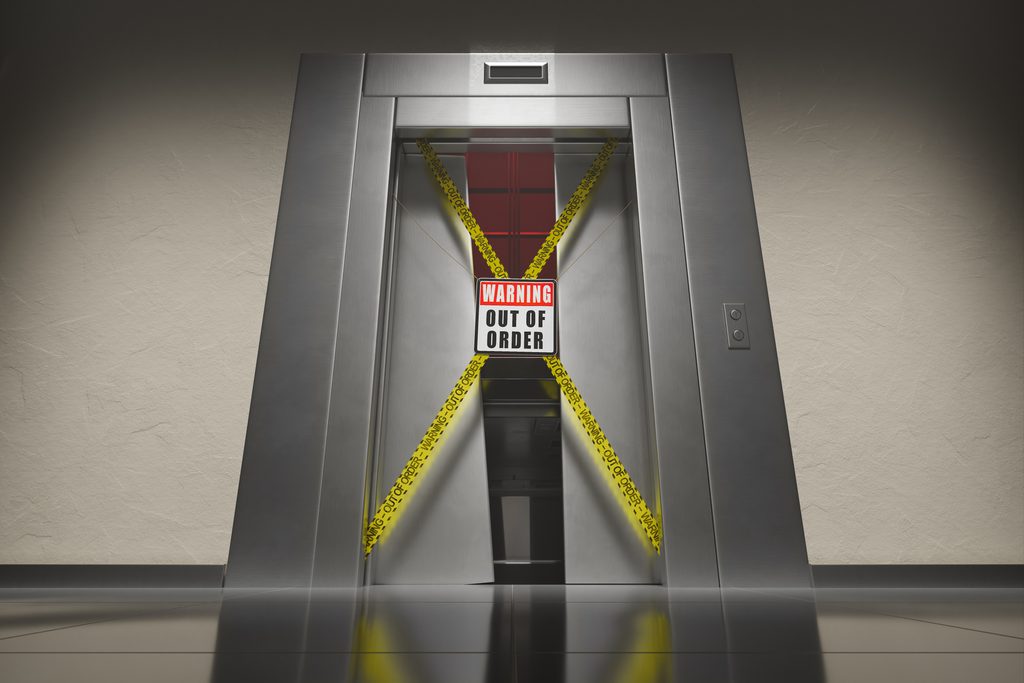
Hydraulic elevators are critical to the safe, reliable movement of people throughout universities and healthcare facilities. When an elevator is unavailable, the impact extends well beyond inconvenience. An outage can disrupt building operations, create accessibility challenges, require emergency response, increase maintenance costs, and undermine passenger confidence.
For facility managers, elevator service providers, and maintenance teams, the objective is straightforward: keep elevators operating safely, consistently, and reliably.
Covion Solutions helps universities achieve their objectives by addressing an important but overlooked component of hydraulic elevator performance: Hydraulic fluid health.
Hydraulic elevators depend on clean, stable oil to operate properly. Yet fluid degradation develops gradually, then accelerates. It’s largely invisible during routine elevator operation. Oxidation, moisture contamination, additive depletion, thermal stress, and varnish formation affect the condition of the oil and the components that depend on it.
Covion combines fluid expertise, monitoring technology, advanced analytics, and actionable fluid intelligence to help maintenance teams better understand what is happening inside their elevator systems and take proactive steps to protect equipment, passengers, and operations.
Elevator Reliability Is More Than an Equipment Issue
Elevator outages have significant consequences for the people and organizations that depend on them.
Across universities and other high-traffic facilities, recurring elevator outages and passenger entrapments have created accessibility problems, interrupted classes and work, required emergency response, and generated significant frustration among building occupants. The examples documented across the source articles demonstrate how quickly elevator reliability becomes an operational and reputational issue.
These incidents result from many causes. Aging controls, electrical problems, door systems, component failures, heavy usage, and other mechanical conditions can all contribute to downtime.
In a hydraulic elevator, however, fluid condition is one core reliability variable that can be measured, managed, and improved.
Instead of waiting for visible symptoms to indicate that something may be wrong, Covion helps maintenance teams gain greater insight into hydraulic oil condition so fluid-related risks can be identified and addressed earlier.
The Risk You Cannot See
Hydraulic fluid performs critical functions within an elevator system. When that fluid is healthy, it supports predictable hydraulic operation. When it deteriorates, changes develop that affect system performance.
Sluggish valve response, inconsistent leveling, reduced ride quality, and unexpected downtime are indicators of conditions that deserve attention. By the time these symptoms become apparent, however, degradation is present within the fluid.
Traditional maintenance practices identify many mechanical problems, but periodic inspections provide only a view of conditions at a particular moment. Fluid degradation is a continuous ongoing process.
Covion brings a layer of intelligence to hydraulic elevator maintenance by making fluid condition visible. Rather than treating hydraulic oil simply as a consumable that is periodically changed, Covion approaches it as a critical reliability asset whose condition can provide valuable information about developing risk.
FluidIQ™ Provides Continuous Fluid Intelligence
FluidIQ™ is an important component of the Covion hydraulic elevator solution.
The technology provides continuous, real-time hydraulic oil health monitoring using advanced online sensing and AI-powered analytics. This gives maintenance and operations teams early visibility into developing fluid-related risks and provides actionable information that can support better maintenance decisions.
Instead of relying solely on symptoms or waiting for an elevator performance problem to become apparent, teams can understand how fluid condition is changing over time.
FluidIQ™ continuously tracks key indicators of hydraulic oil condition, including varnish potential, antioxidant remaining life, moisture contamination, and temperature stress. Covion provides a Fluid Health summary that gives teams an overall view of hydraulic oil condition.
The result is intelligence that helps maintenance teams recognize developing risks and plan corrective action before those conditions contribute to larger reliability problems.
Moving from Reactive Maintenance to Proactive Control
A conventional maintenance cycle often begins when someone notices a problem. An elevator levels inconsistently. Ride quality changes. A valve becomes sluggish. The elevator shuts down. A service call is made, technicians investigate the problem, and corrective action follows.
Covion helps shift part of that process upstream.
Continuous fluid monitoring gives teams an opportunity to recognize degradation before it progresses into more significant fluid-related performance problems. Varnish and additive interventions from Covion mitigate these conditions and ensure fluid quality never becomes a root cause of safety issues or reliability failures.
This is particularly valuable for organizations managing multiple elevators and facilities. Instead of treating every hydraulic system as if its oil were in the same condition, maintenance teams can make decisions based on what is actually happening within the fluid.
That visibility can support better planning, reduce unnecessary maintenance, extend useful fluid life, and help prevent fluid-related disruptions before they affect operations. These are among the primary benefits to Covion’s FluidIQ™ approach.
From Detection to Corrective Action
Information alone does not improve elevator reliability. Teams must act on what the information reveals.
That is why Covion’s value extends beyond simply collecting fluid data. FluidIQ™ converts developing fluid conditions into clearer, actionable insight so maintenance teams can determine when corrective action should be considered.
When monitoring identifies varnish potential, moisture contamination, antioxidant depletion, oxidation, or thermal stress, Covion’s varnish and additive services mitigate the problems before issues arise.
This creates a seamless approach to hydraulic elevator maintenance, one in which fluid condition becomes part of the overall safety and reliability strategy.
The objective is not to replace the elevator service provider or traditional preventive maintenance. It is to give those responsible for elevator performance another set of tools to eliminate fluid-related risk.
Safety Begins with Fluid Health™
Passenger safety is ultimately one of the most important outcomes of elevator maintenance.
Reliable operation, consistent leveling, predictable valve response, and reduced downtime all contribute to an elevator system that passengers can use with greater confidence.
For organizations responsible for public buildings, campuses, residential properties, healthcare environments, and other facilities, reliability also supports accessibility. When an elevator represents the primary accessible route between floors, downtime can prevent people with limited mobility from reaching classrooms, workplaces, residences, services, or other essential areas.
Covion’s role within that larger responsibility is focused and measurable: help organizations better understand, control, and mitigate fluid-related risk in hydraulic elevator systems.
FluidIQ™ helps protect passengers, reduce risk, and give maintenance teams greater control over hydraulic elevator performance by identifying fluid degradation earlier and correcting the issues at an early stage.
Make Hydraulic Fluid Part of Your Reliability Strategy
Elevator reliability should not depend solely on responding quickly when something goes wrong. The better opportunity is to identify correctable risks before they become operational problems.
Covion Solutions brings fluid health into the hydraulic elevator reliability equation through continuous monitoring, advanced analytics, fluid expertise, and mitigation services.
With FluidIQ™, maintenance and operations teams can see conditions that were previously difficult to recognize, understand how hydraulic oil is changing, and trigger corrective action.
The outcome is a proactive approach to hydraulic elevator maintenance focused on what matters most: protecting passengers, reducing risk, improving reliability, and maintaining consistent elevator performance.
If safety and reliability are priorities for your hydraulic elevator systems, it is time to make fluid health visible.
Covion Solutions. Safety Begins with Fluid Health™.